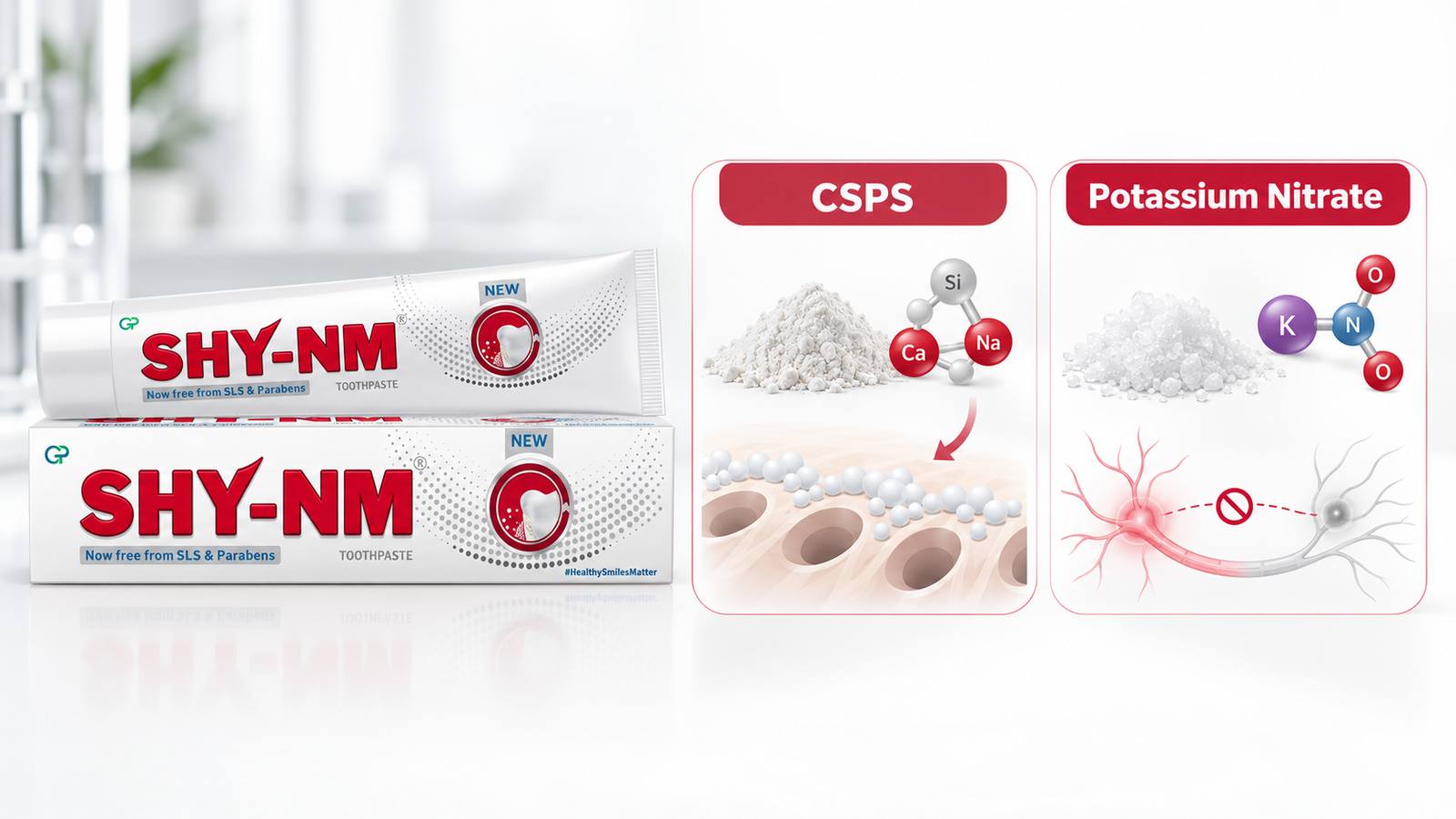
Plaque accumulation is closely associated with gingival inflammation and is an important factor in the development of gingivitis. Daily mechanical plaque removal through toothbrushing remains the foundation of oral hygiene, but dentifrices can provide additional chemical or physicochemical effects that may support plaque control.
This has led to research into bioactive glass as an ingredient in oral care formulations. Beyond its established interest in applications such as dentin hypersensitivity management and mineral-related dental research, bioactive glass has also been investigated for its potential effects on plaque and gingival health.
One randomized clinical trial published in 2011 evaluated a dentifrice containing bioactive glass particulate for its antiplaque and antigingivitis effects. The study compared the test dentifrice with a placebo dentifrice over four weeks and assessed changes in plaque and gingival bleeding. The results showed significant reductions in both measures in the bioactive glass group during the study period.
Plaque Biofilm and Gingival Inflammation in Clinical Practice
Dental plaque is a structured microbial biofilm that develops on tooth surfaces. When plaque is allowed to accumulate around the gingival margin, it can contribute to gingival inflammation.
Gingivitis can present with clinical signs such as redness, swelling and gingival bleeding. Effective plaque control is therefore an important part of maintaining gingival health and preventing the progression of plaque-associated inflammation.
Relationship Between Plaque Accumulation and Gingivitis
The relationship between plaque accumulation and gingival inflammation has been extensively studied. As plaque accumulates around the gingival margin, the surrounding gingival tissues can respond with an inflammatory reaction.
This makes plaque control an important component of gingivitis management.
Importantly, gingivitis and periodontitis are not interchangeable terms. Gingivitis refers to inflammation of the gingiva, while periodontitis involves deeper periodontal tissues and attachment loss. The clinical trial discussed here specifically evaluated adults without periodontitis and focused on plaque and gingival health.
Importance of Daily Chemical and Mechanical Plaque Control
Mechanical plaque removal through regular toothbrushing remains central to daily oral hygiene.
Dentifrices can complement this mechanical action. Depending on their formulation, they may contain ingredients intended to provide additional effects against plaque accumulation, gingival inflammation, sensitivity or other oral conditions.
The 2011 study was based on this principle, investigating whether incorporating bioactive glass into a daily-use dentifrice could influence plaque accumulation and gingival bleeding.
Why Bioactive Glass Is Being Studied in Oral Care
Bioactive glass is a class of materials containing components such as calcium, sodium, phosphorus and silicon.
Its dental applications have attracted interest because of its ability to undergo surface reactions in an aqueous environment and release ions. These physicochemical characteristics have been investigated in several areas of oral care research.
In the context of plaque and gingival health, researchers have explored whether these properties may also influence the oral environment and microbial activity.
Physicochemical Properties of Bioactive Glass
When bioactive glass comes into contact with an aqueous environment, ions can be released from the material and surface reactions can take place.
These reactions can alter the local environment around the glass particles. Previous laboratory research has investigated the effects of bioactive glass on oral microorganisms, providing a basis for further investigation of its potential role in oral care.
It is important, however, to distinguish laboratory antimicrobial observations from clinical outcomes. A material demonstrating antimicrobial activity in vitro does not automatically establish an equivalent clinical effect in people.
Interaction With the Oral Environment
The oral cavity provides a continuously changing environment containing saliva, microorganisms, dietary components and tooth surfaces.
Bioactive glass can interact with this environment through ion release and surface reactions. These characteristics have been studied in relation to several dental applications.
For plaque and gingival health, the question is whether these material properties translate into measurable changes in plaque accumulation or gingival inflammation during regular use.
Potential Mechanisms Relevant to Plaque and Gingival Health
Several mechanisms have been investigated to explain the biological activity of bioactive glass in oral environments.
Laboratory research has reported effects of bioactive glass on oral microorganisms, while clinical research has evaluated changes in plaque and gingival parameters.
However, the 2011 clinical trial was designed primarily to evaluate clinical outcomes rather than establish a single definitive mechanism responsible for the observed changes.
Therefore, the reduction in plaque and gingival bleeding reported in the trial should be presented as a clinical finding rather than attributed to one specific antimicrobial pathway without further evidence.
Overview of the Randomized Clinical Trial
The study by Aruna Devi and colleagues evaluated the antiplaque and antigingivitis effects of a bioactive glass-containing dentifrice in a randomized clinical setting.
The trial used a randomized, triple-blind, parallel-group design and compared an experimental dentifrice containing bioactive glass with a placebo control dentifrice. Sixty volunteers completed the study.
Patient Population and Study Design
The participants were adults above 18 years of age and were selected from a student population. The study included 60 participants, consisting of 50 males and 10 females, with a mean age of approximately 19.6 years.
The participants were selected without periodontitis and had gingival conditions suitable for evaluating changes in plaque and gingival health.
Before the intervention, all participants underwent supragingival prophylaxis and polishing to remove plaque, calculus and extrinsic staining. This helped bring plaque levels to a similar starting point before the assigned dentifrices were used.
Participants were then instructed in proper brushing technique and used their assigned dentifrice and toothbrush.
Clinical assessments were performed at baseline and again after four weeks.
Clinical Parameters Evaluated
The study assessed two primary clinical parameters:
Plaque Index (PLI): Used to evaluate the amount of plaque present on the tooth surfaces.
Gingival Bleeding Index (GBI): Used to assess gingival bleeding as a clinical indicator of gingival inflammation.
The same indices were used at baseline and at the four-week assessment.
Effects on Plaque Scores
Plaque accumulation was significantly reduced in the group using the bioactive glass dentifrice.
At baseline, the mean plaque index in the test group was 1.12. After four weeks, this decreased to 0.65.
The control group showed little change, with the mean plaque index moving from 1.34 at baseline to 1.30 after four weeks. The difference between the groups at four weeks was statistically significant.
Changes Observed Over Four Weeks
The authors reported an approximately 40% reduction in plaque growth in the bioactive glass dentifrice group over the four-week period.
The reduction was statistically significant, with the study reporting p < 0.001 for the plaque index comparison within the test group.
In contrast, the placebo group did not demonstrate a comparable reduction during the study period.
These findings provide clinical evidence that the bioactive glass dentifrice used in this particular trial was associated with reduced supragingival plaque compared with the placebo dentifrice.
It is worth emphasizing that this result applies to the formulation and study conditions evaluated. It should not automatically be generalized to every dentifrice containing bioactive glass.
Effects on Gingival Bleeding
The second major clinical outcome was gingival bleeding.
Gingival bleeding is commonly used as a clinical indicator of gingival inflammation and can provide a measurable way of assessing changes in gingival health.
Clinical Changes Compared With Placebo
In the bioactive glass group, the mean gingival bleeding index decreased from 0.16 at baseline to 0.08 after four weeks.
The study reported this as an approximately 50% reduction in gingival bleeding during the four-week intervention period. The reduction was statistically significant.
The placebo group showed no comparable improvement, with the mean gingival bleeding index changing from 0.13 at baseline to 0.15 at four weeks. The difference between the groups at four weeks was also statistically significant.
The authors therefore concluded that the bioactive glass-containing dentifrice significantly improved gingival health, as measured by reductions in gingival bleeding and supragingival plaque, compared with the placebo dentifrice over four weeks.
What Do These Findings Mean for Dental Professionals?
The study provides clinical evidence that a dentifrice containing bioactive glass can be associated with reductions in both plaque and gingival bleeding over a four-week period.
For dental professionals, this is relevant because plaque control is an essential part of maintaining gingival health.
However, the findings should be considered within the context of the study population, formulation and duration. The trial does not establish that bioactive glass dentifrice can replace professional periodontal care or mechanical plaque control.
Potential Role as an Adjunct to Mechanical Plaque Control
The most appropriate way to interpret these findings is in the context of routine oral hygiene.
Toothbrushing physically disrupts and removes plaque. A dentifrice may provide additional chemical or physicochemical effects during brushing.
The clinical trial suggests that the tested bioactive glass dentifrice may provide an additional benefit in controlling supragingival plaque and gingival bleeding when used as part of daily toothbrushing.
This is consistent with the broader concept that dentifrice formulations can complement, rather than replace, mechanical plaque control.
Importance of Patient-Specific Oral Hygiene Protocols
The management of gingival inflammation should remain patient-specific.
Factors such as brushing technique, brushing frequency, interdental plaque control, existing gingival inflammation, periodontal status and individual risk factors should be considered when developing an oral hygiene protocol.
A dentifrice containing bioactive glass may be considered as one component of an overall oral hygiene strategy, but product selection should not be separated from appropriate clinical assessment and oral hygiene instruction.
Limitations and Need for Further Research
The 2011 clinical trial provides useful clinical evidence, but several limitations should be considered.
First, the study had a relatively small sample of 60 participants and lasted only four weeks. The authors themselves noted that longer clinical studies would be required to determine the long-term effectiveness of the formulation.
Second, the study population was relatively young, with a mean age of approximately 19.6 years. Therefore, the findings may not directly represent older adults or patients with more complex periodontal conditions.
Third, the study focused on clinical indices of plaque and gingival bleeding. It did not establish precisely which changes in the plaque microbiome or bacterial composition were responsible for the observed clinical effects.
The authors specifically identified the need for further research to determine whether the reduction in gingival bleeding was related to changes in plaque composition, changes in bacterial species or simply an overall reduction in plaque levels. They also highlighted the need for research into whether repeated use could lead to microbial resistance.
These limitations are important because they help define what the study demonstrates and what remains unanswered.
The findings are also supported by earlier clinical research. A 2006 pilot clinical trial evaluated a bioactive glass dentifrice containing NovaMin over six weeks and investigated its antiplaque and antigingivitis effects. However, different studies used different formulations, populations and study protocols, so their results should not be treated as directly interchangeable.
Clinical Conclusion
The available clinical evidence indicates that bioactive glass dentifrice has potential relevance for plaque and gingival health.
In the 2011 randomized, triple-blind clinical trial, a 5% bioactive glass dentifrice was associated with significant reductions in supragingival plaque and gingival bleeding over four weeks compared with a placebo dentifrice. The study reported approximately 40% reduction in plaque growth and 50% reduction in gingival bleeding in the test group.
These findings provide clinical support for investigating bioactive glass toothpaste for gingivitis and its potential role in daily plaque control.
At the same time, the evidence should be interpreted within the limits of the available research. The study was short-term, involved a relatively small and young population, and did not establish the precise biological mechanism responsible for the observed clinical changes.
For dental professionals, the evidence supports viewing bioactive glass dentifrice as a potential adjunct to mechanical plaque control rather than as a replacement for established oral hygiene practices or professional periodontal care.
Further longer-term and independently replicated clinical studies can help clarify the sustained effects of bioactive glass dentifrices on plaque accumulation, gingival inflammation and the oral microbiome.
Reference
Aruna Devi M, Vijaylakshmi B, Radha, Pallavi, Kadandakuppe S, Nagashree SR. Antiplaque and antigingivitis effect of a dentifrice containing bioactive glass particulate: A randomized clinical trial. International Journal of Clinical Dental Science. 2011;2(1):46–49.