Dentin hypersensitivity is a common clinical concern that can affect eating, drinking, brushing and overall oral comfort. For patients with exposed dentin, even routine stimuli such as cold water, air, touch or certain foods can trigger a sharp, short-lasting pain.
Desensitizing toothpastes are commonly used as a non-invasive approach to managing dentin hypersensitivity. Among the active ingredients studied for this purpose, calcium sodium phosphosilicate (CSPS) has received considerable clinical and research attention.
So, what does the current evidence actually show about calcium sodium phosphosilicate for dentin hypersensitivity?
A 2025 umbrella review published in the Saudi Dental Journal evaluated existing systematic reviews and meta-analyses on CSPS-containing toothpastes. The review found that CSPS-containing toothpastes were more effective than placebo and negative controls in reducing dentin hypersensitivity. At the same time, the authors highlighted considerable heterogeneity between studies and generally low or critically low methodological quality, meaning that the findings should be interpreted with appropriate caution.
Understanding Dentin Hypersensitivity in Clinical Practice
Dentin hypersensitivity is generally described as a short, sharp pain arising from exposed dentin in response to stimuli such as thermal, physical or chemical changes.
The condition can occur when enamel is lost or when gingival recession exposes the root surface. Depending on the underlying cause, patients may experience sensitivity while consuming cold or hot foods and beverages, during toothbrushing, or when the exposed area comes into contact with air or other stimuli.
Management therefore begins with understanding why dentin has become exposed and identifying the factors contributing to the patient’s sensitivity.
Pathophysiology of Dentin Hypersensitivity
One of the most widely discussed explanations for dentin hypersensitivity is the hydrodynamic theory.
Dentin contains microscopic channels known as dentinal tubules. When these tubules become exposed, external stimuli can cause movement of fluid within them. This fluid movement can stimulate structures associated with the dental pulp and produce the characteristic sharp pain associated with dentin hypersensitivity.
From a clinical perspective, reducing the movement of fluid through exposed dentinal tubules is therefore an important approach to sensitivity management.
Role of Exposed Dentinal Tubules in Sensitivity
Healthy enamel and cementum normally protect dentin from direct exposure to the oral environment. When this protective covering is reduced or lost, dentinal tubules can become exposed.
The number, diameter and exposure of these tubules can influence dentin permeability. Treatments that reduce tubule patency can therefore help reduce the movement of fluid through dentin.
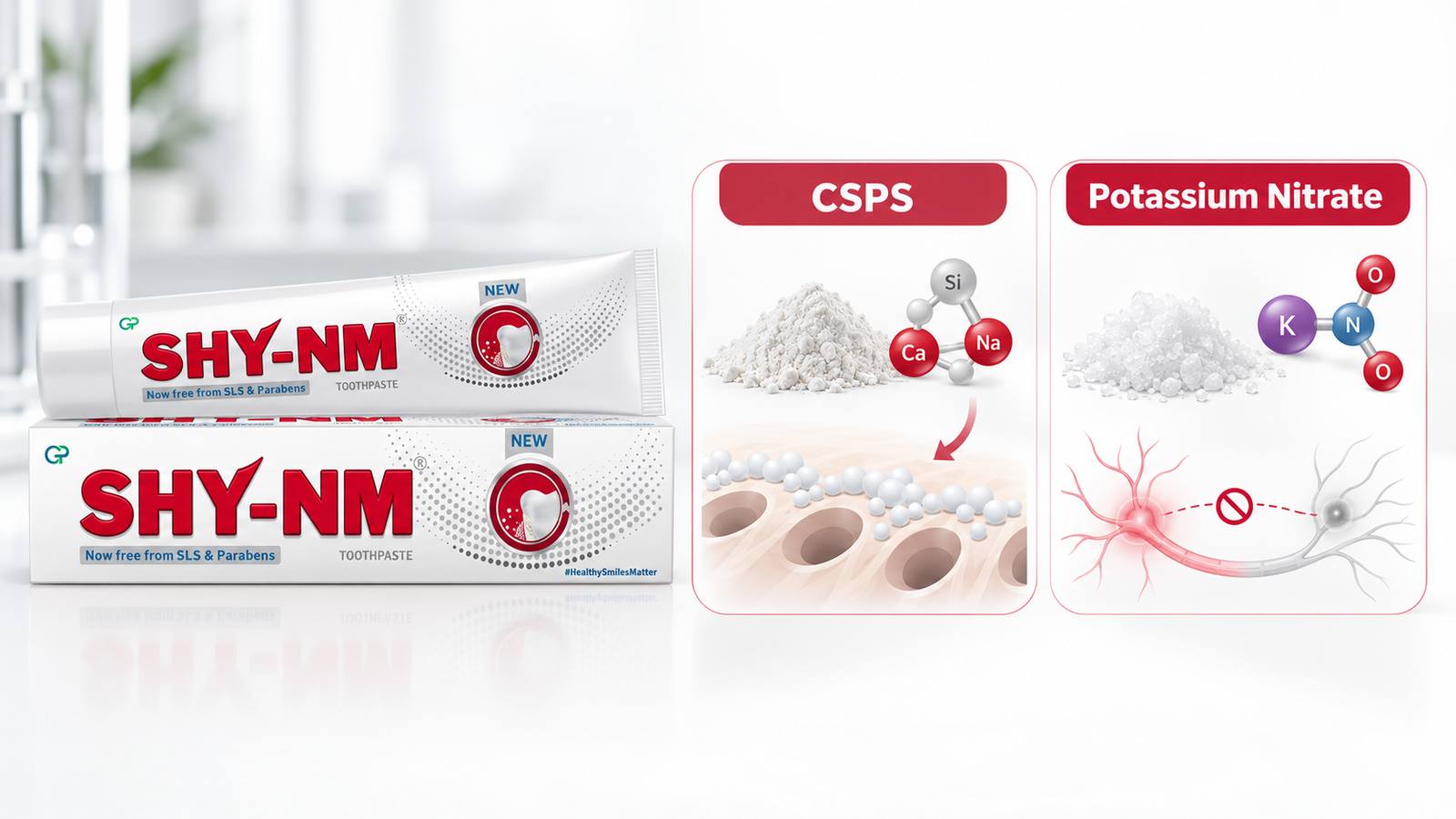
This is one of the key principles behind several desensitizing agents, including calcium sodium phosphosilicate, which has been investigated for its ability to form a mineral-rich layer over exposed dentin.
What Is Calcium Sodium Phosphosilicate?
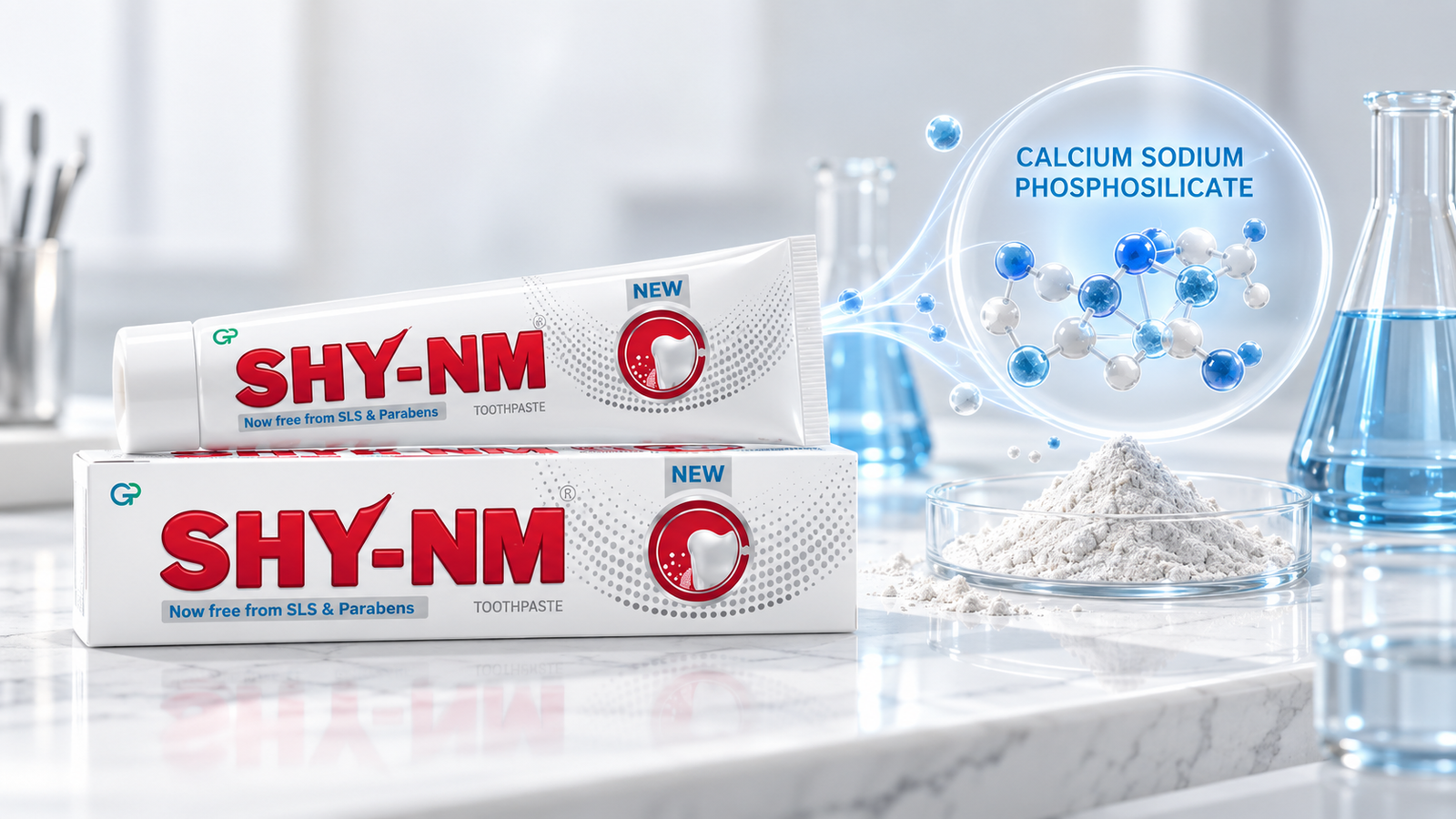
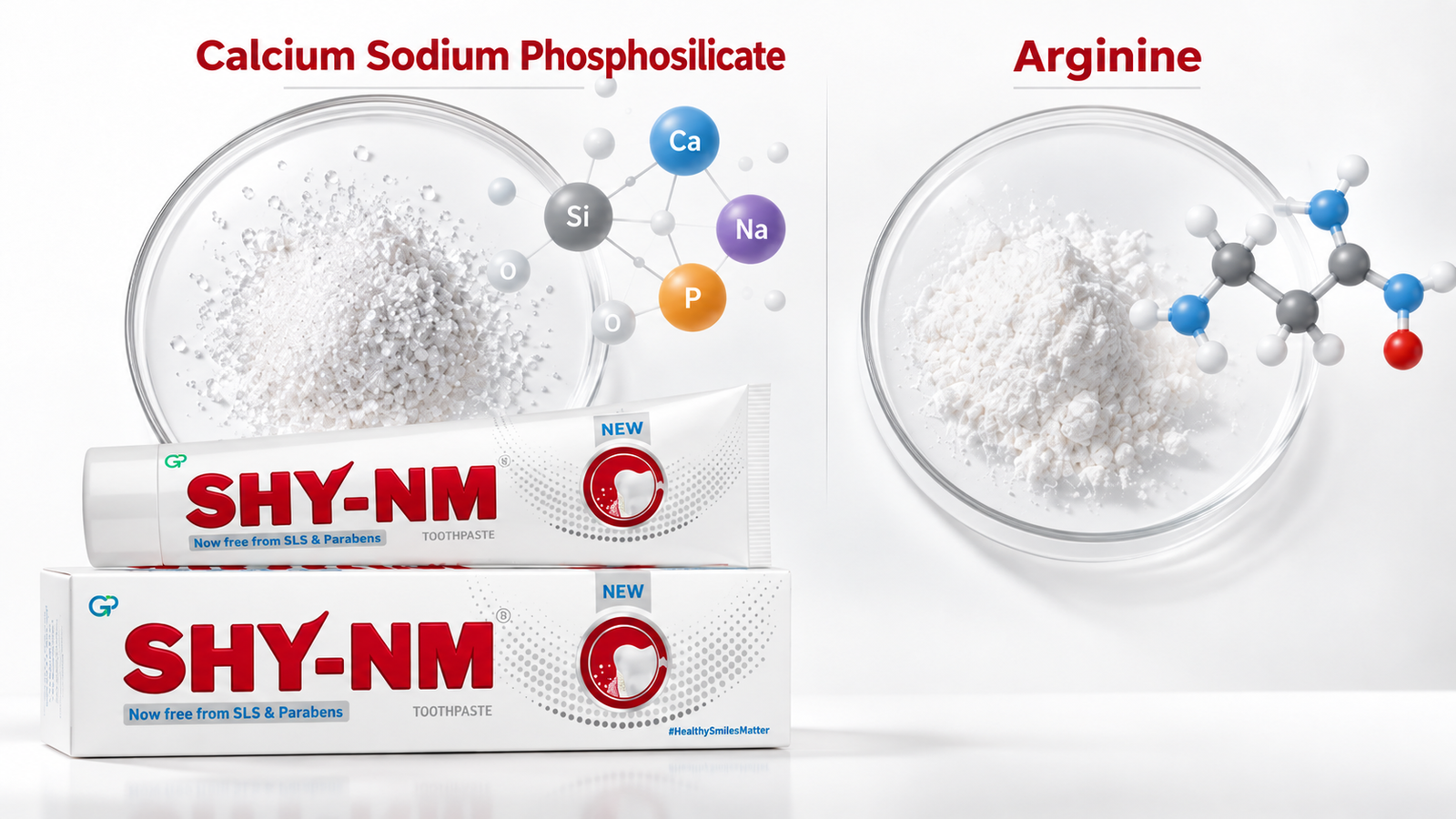
Calcium sodium phosphosilicate is a type of bioactive glass that has been investigated in dentistry for applications including dentin hypersensitivity management.
It contains calcium, sodium, phosphorus and silicon. When the material interacts with an aqueous environment, a series of surface reactions can occur, ultimately supporting the formation of a calcium and phosphate-rich mineral layer.
In the context of a toothpaste formulation, this mechanism is particularly relevant when the active ingredient comes into contact with saliva and exposed dentinal surfaces.
Bioactive Glass Composition and Mechanism
The clinical interest in CSPS comes largely from its bioactive behaviour.
When CSPS interacts with body fluids, including saliva, ions released from the glass can participate in reactions at the exposed surface. These reactions can contribute to the formation of a hydroxycarbonate apatite-like mineral layer.
This mineral deposition can help cover exposed dentinal surfaces and reduce dentin permeability. The proposed mechanism therefore differs from simply masking sensitivity. It involves interaction with the exposed dentin surface and the development of a mineral-rich layer.
Research reviewed in the 2025 umbrella review identifies tubule occlusion and reduced dentin permeability as important mechanisms associated with CSPS-containing desensitizing toothpastes.
Interaction of CSPS With Saliva and Dentinal Surfaces
Saliva plays an important role in the oral environment in which CSPS functions.
Once the toothpaste comes into contact with saliva and exposed dentin, the calcium sodium phosphosilicate particles can undergo surface reactions. These reactions support the availability of calcium and phosphate ions and the development of a mineral-rich surface deposit.
This interaction is important because the objective is not simply to place an inert coating over the exposed dentin. The bioactive nature of CSPS allows the material to participate in mineral formation at the dentin surface.
Formation of a Mineral-Rich Layer Over Exposed Dentin
The resulting mineral-rich layer can cover exposed dentinal surfaces and contribute to the occlusion of dentinal tubules.
By reducing open pathways through the dentin, tubule occlusion may reduce the movement of fluid associated with sensitivity.
The 2025 umbrella review notes that CSPS can produce hydroxycarbonate apatite when exposed to bodily fluids and that the resulting mineralized layer can occlude exposed dentin and reduce permeability.
What Does the Umbrella Review Show?
The most recent evidence synthesis specifically addressing this question is the 2025 umbrella review by Ziaaddini and colleagues.
An umbrella review is different from a conventional systematic review. Rather than primarily examining individual clinical trials, it brings together evidence from existing systematic reviews and meta-analyses. This makes it useful when several reviews have already investigated the same clinical question.
For CSPS and dentin hypersensitivity, the researchers searched PubMed, Embase, Scopus, Cochrane and Web of Science. From 5,681 initially identified records, nine systematic reviews were ultimately included.
Evidence From Systematic Reviews and Meta-Analyses
The included reviews examined CSPS-containing toothpastes across different clinical settings, concentrations, comparison groups and follow-up periods.
The CSPS concentrations studied ranged from 2.5% to 15%, while follow-up periods ranged from immediate assessments to six months. Five of the nine included reviews incorporated meta-analysis.
Overall, the reviews generally reported that CSPS-containing toothpastes were more effective than placebo and negative controls in reducing dentin hypersensitivity.
The umbrella review also identified evidence from earlier systematic reviews and network meta-analysis suggesting that CSPS can provide meaningful sensitivity reduction across tactile, air and cold stimuli. However, the authors did not treat these findings as definitive because of differences between the underlying studies.
This distinction is important. The current evidence supports CSPS as a potentially effective desensitizing ingredient, but it does not mean that every CSPS formulation will produce the same clinical outcome in every patient.
CSPS Compared With Placebo and Negative Controls
One of the clearest findings from the umbrella review was the overall benefit of CSPS-containing toothpastes compared with placebo and negative-control toothpastes.
The review included comparisons involving inert placebo formulations as well as negative-control toothpastes that did not contain a specific desensitizing active ingredient. Some negative-control formulations could still contain fluoride, which itself may contribute to sensitivity reduction.
The findings therefore support the clinical potential of CSPS, while also highlighting why the control formulation matters when interpreting individual studies.
The review also found that outcomes could vary according to CSPS concentration. Some evidence suggested stronger effects with 5% formulations, while other findings pointed towards differences at 7.5%. At 2.5%, the benefit over placebo appeared more limited in one of the reviewed analyses. However, the heterogeneity between studies prevented the researchers from establishing a reliable dose-response relationship.
Clinical Relevance for Dentists
For dental professionals, the evidence around CSPS is most relevant when considered as part of a broader dentin hypersensitivity management strategy.
The available research supports the use of desensitizing toothpastes as a non-invasive option, particularly when the clinical objective is to reduce sensitivity associated with exposed dentin.
At the same time, dentin hypersensitivity should not automatically be treated as an isolated condition. The clinician should consider possible contributing factors such as gingival recession, enamel or dentin loss, erosion and other causes of exposed dentin.
Where CSPS May Fit in Hypersensitivity Management
CSPS-containing toothpaste may be considered as an at-home approach for patients experiencing dentin hypersensitivity.
The 2025 umbrella review specifically notes potential relevance for patients with acute or persistent sensitivity, including cases associated with enamel erosion, gingival recession or post-procedural sensitivity.
Its proposed mode of action makes CSPS particularly relevant where exposed dentinal tubules are contributing to sensitivity.
However, the choice of desensitizing agent should remain patient-specific. Clinical assessment is important to identify the underlying cause of sensitivity and determine whether an at-home desensitizing toothpaste is appropriate on its own or as part of a wider management approach.
Patient Selection and Adjunctive Use
Desensitizing toothpaste can form part of conservative sensitivity management, but it should not replace diagnosis.
For patients with persistent, severe or unexplained sensitivity, identifying the underlying dental condition remains important. Depending on the cause, professional approaches may include fluoride-based treatments, restorative or adhesive procedures, or other interventions.
CSPS-containing toothpaste can therefore be viewed as one component within the broader range of dentin hypersensitivity management options.
Limitations of the Available Evidence
The current evidence is encouraging, but it is not without limitations.
The most important limitation identified by the 2025 umbrella review was substantial heterogeneity across the available studies. The included reviews differed in study design, patient populations, CSPS concentrations, control groups, outcome measures and follow-up periods.
The methodological quality of the underlying evidence was also a concern. Eight of the nine included reviews were assessed as having low or critically low methodological quality, while only two reviews demonstrated a low risk of bias across all ROBIS domains.
There was also substantial overlap between the primary clinical trials included across the different systematic reviews. The umbrella review identified 29 unique primary studies across the reviews, with a high degree of overlap.
Another important research gap concerns CSPS concentration. Because of the variation in concentrations and study designs, the researchers could not perform a reliable quantitative subgroup analysis to establish a clear dose-response relationship. The evidence regarding different concentrations was also not completely consistent.
These limitations do not eliminate the observed clinical benefit. Instead, they indicate that the strength and consistency of the evidence should be considered when interpreting the findings.
Further well-designed, standardized clinical trials are needed to clarify the relationship between CSPS concentration, treatment duration and clinical response.
Clinical Takeaway
So, what does the current clinical evidence show about calcium sodium phosphosilicate for dentin hypersensitivity?
The 2025 umbrella review provides evidence that CSPS-containing toothpastes can reduce dentin hypersensitivity compared with placebo and negative-control toothpastes. Its proposed mechanism involves interaction with the oral environment, formation of a mineral-rich layer and occlusion of exposed dentinal tubules, which can reduce dentin permeability.
For clinicians, CSPS can therefore be considered a relevant active ingredient among non-invasive approaches to dentin hypersensitivity management.
At the same time, the evidence should be interpreted in context. Differences in formulations, CSPS concentrations, patient populations, outcome measurements and study quality make it difficult to determine the exact magnitude of benefit or establish a definitive dose-response relationship.
In practical terms, the current evidence supports calcium sodium phosphosilicate as a clinically relevant option for dentin hypersensitivity, while also reinforcing the need for continued high-quality clinical research.
Reference
Ziaaddini S, Riahi N, Majidinia S, et al. Calcium sodium phosphosilicate toothpastes impact on the treatment of dentin hypersensitivity: an umbrella review. Saudi Dental Journal. 2025;37(10–12):73. DOI: 10.1007/s44445-025-00079-y.